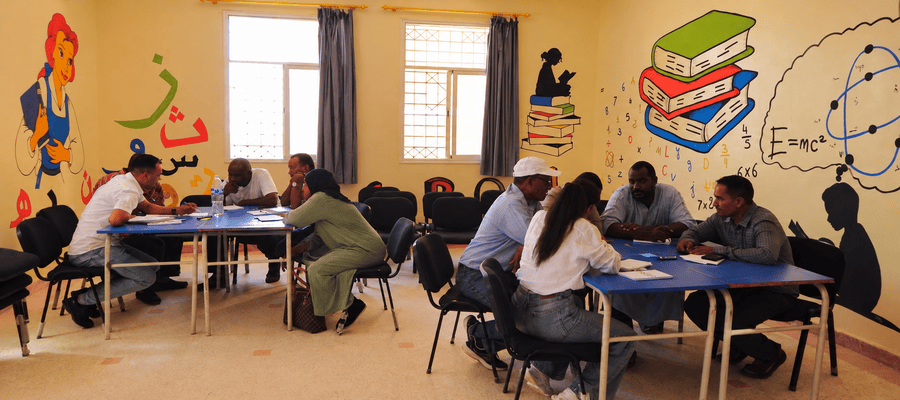
The Great Green Wall (GGW) Initiative is not built solely through large-scale programs and institutions. It is also built on a daily basis, at the local level and within communities, thanks to the efforts of numerous civil society organizations (CSOs). However, much of this work remains invisible within the initiative’s official monitoring and recognition mechanisms.
As part of the Program of Structured Actions by Actors in the Fight Against Desertification (PASS-LCD), coordinated by CARI, Minka International was asked to prepare a report on the contribution of CSOs to the Great Green Wall. The objective of this report is to better understand what concrete contributions CSOs make to the Great Green Wall, how these contributions are currently measured, and to what extent they are recognized within the initiative’s framework.
Many contributions, but still not visible enough
Following a study based on a literature review as well as qualitative and quantitative surveys conducted among African CSOs and GMV institutions, it was found that CSOs already produce a great deal of information that can be used to document the GMV’s results. However, an analysis of some thirty cases shows that this data remains scattered, poorly harmonized, and insufficiently integrated into the initiative’s monitoring systems. The problem, therefore, is not merely one of data production; it is also one of recognition. CSOs contribute to numerous aspects of the Great Green Wall, such as land and ecosystem restoration, the dissemination of agroecological practices, food security, economic development, job creation, climate change adaptation, local governance, capacity building, and community mobilization. Many of these actions directly align with the current goals of the Great Green Wall, yet they are not identified or counted as such.
A Great Green Wall that goes far beyond land restoration
This issue has become particularly important as the GMV has expanded its scope. Initially focused on combating desertification and restoring land, it now embraces a much broader vision of sustainable territorial transformation and strengthening the resilience of communities. This evolution calls for a broader approach to identifying and measuring contributions to the GMV. If we look only at the number of hectares restored or the funding mobilized, a significant part of the GMV’s reality falls off the radar. The actions carried out by CSOs, in particular, highlight the importance of the initiative’s social, economic, territorial, and institutional dimensions.
Toward Greater Recognition of Civil Society and Its Efforts to Support the GMV
Based on these findings, the report on “Civil Society Contributions to the Great Green Wall” makes several recommendations to strengthen civil society participation, improve data sharing, and foster a more inclusive, collective, and sustainable implementation of the Great Green Wall. Ultimately, the issue extends beyond monitoring and evaluation. It is about better recognizing the diversity of stakeholders who bring the Great Green Wall to life on the ground and creating the conditions that allow their experiences, data, and innovations to fully inform the initiative.