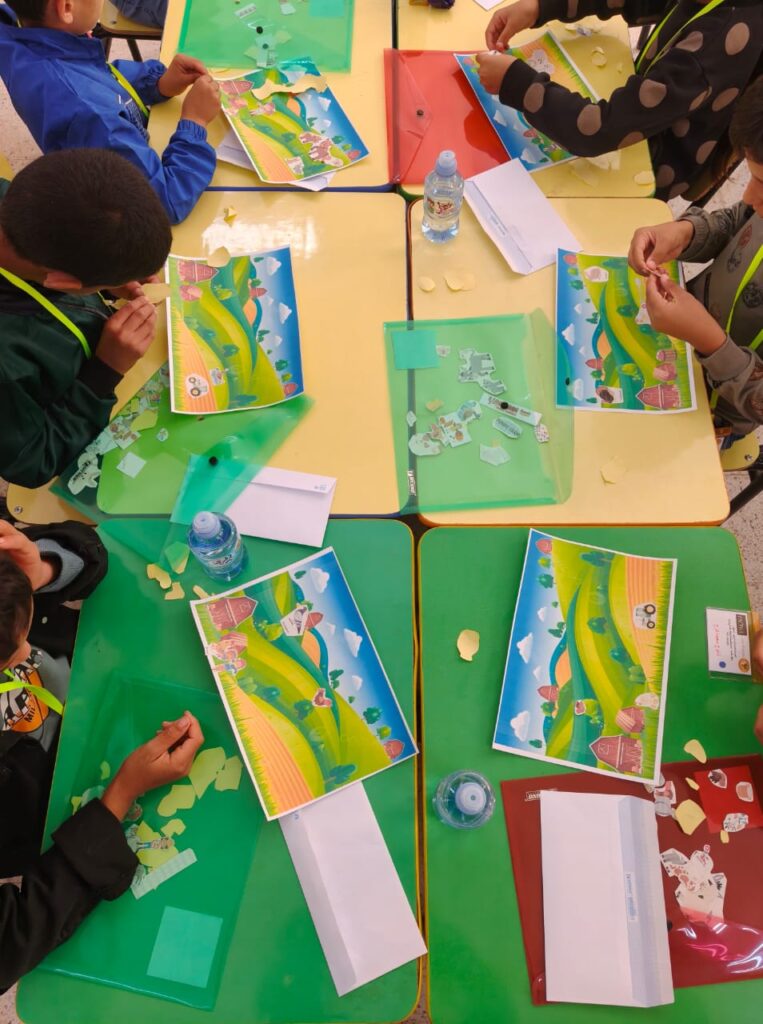
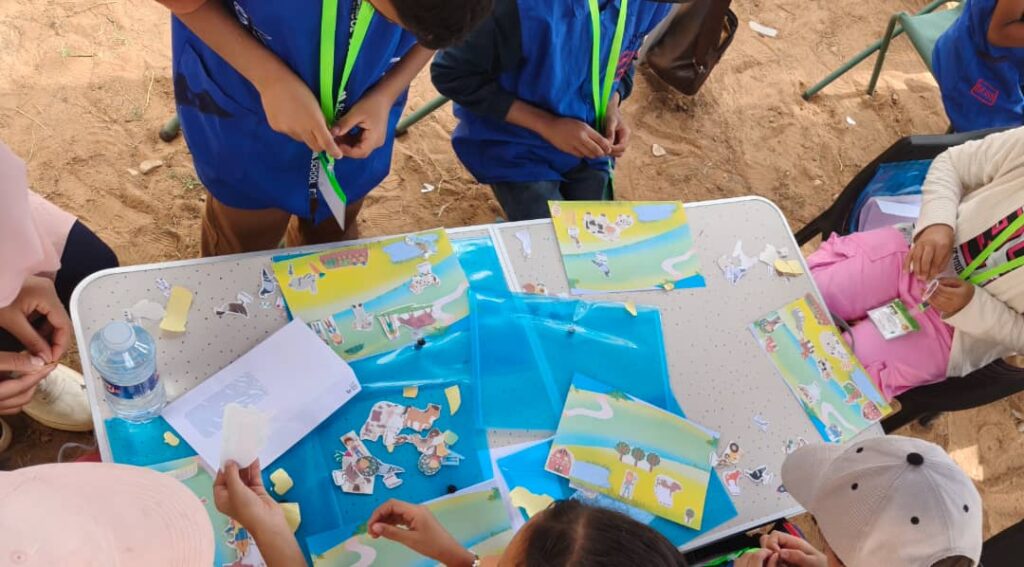
In Laghouat and El Assafia, the PAOMA project, led by CARI and El Argoub is turning schoolchildren into passionate ambassadors for oasis agrobiodiversity through an educational programme, art, theatre and hands-on experience.
Can schools help us reconnect with the earth?
In the province of Laghouat, the answer is a resounding ‘yes’ from everyone.
During the 2025/2026 school year, the El Argoub Association, in partnership with local stakeholders and committed service providers, organised a series of school activities on an unprecedented scale as part of the PAOMA project. Aimed at Year 4 pupils at the KAZOUAI Attallah school in Laghouat and the MECHRAOUI Djelloul school in El Assafia, this programme took on a major challenge: to take environmental education out of textbooks and classrooms and bring it to life in the field, on the stage and online.
The awakening of the Oasis consciousness: from the classroom to Mother Earth
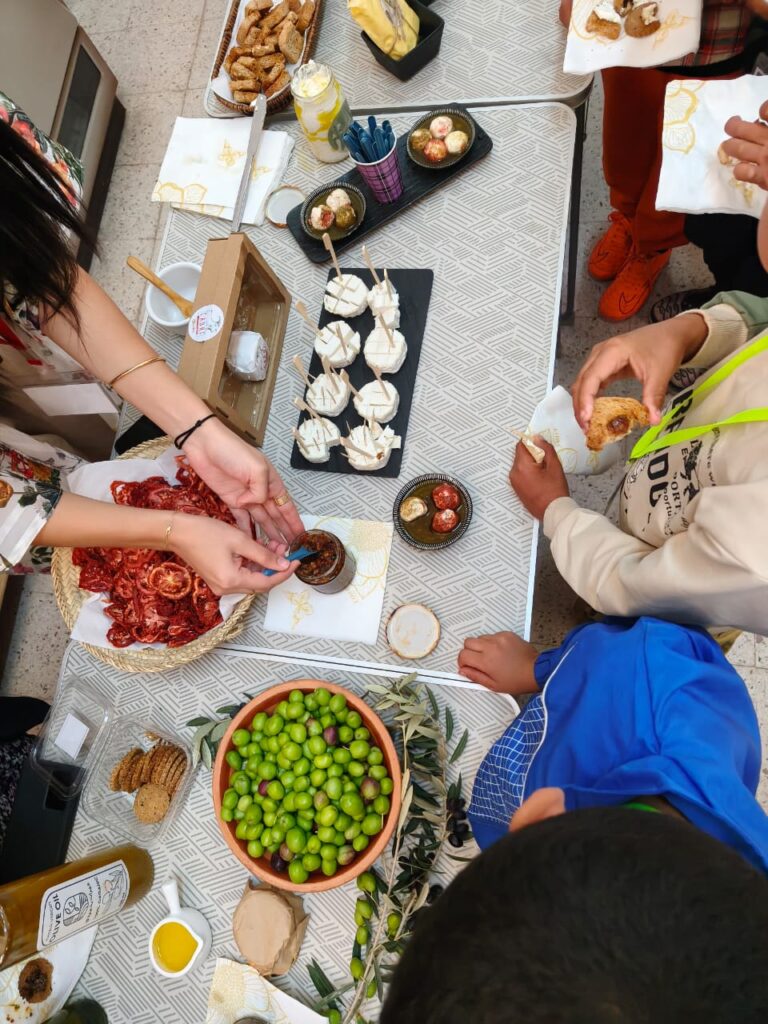
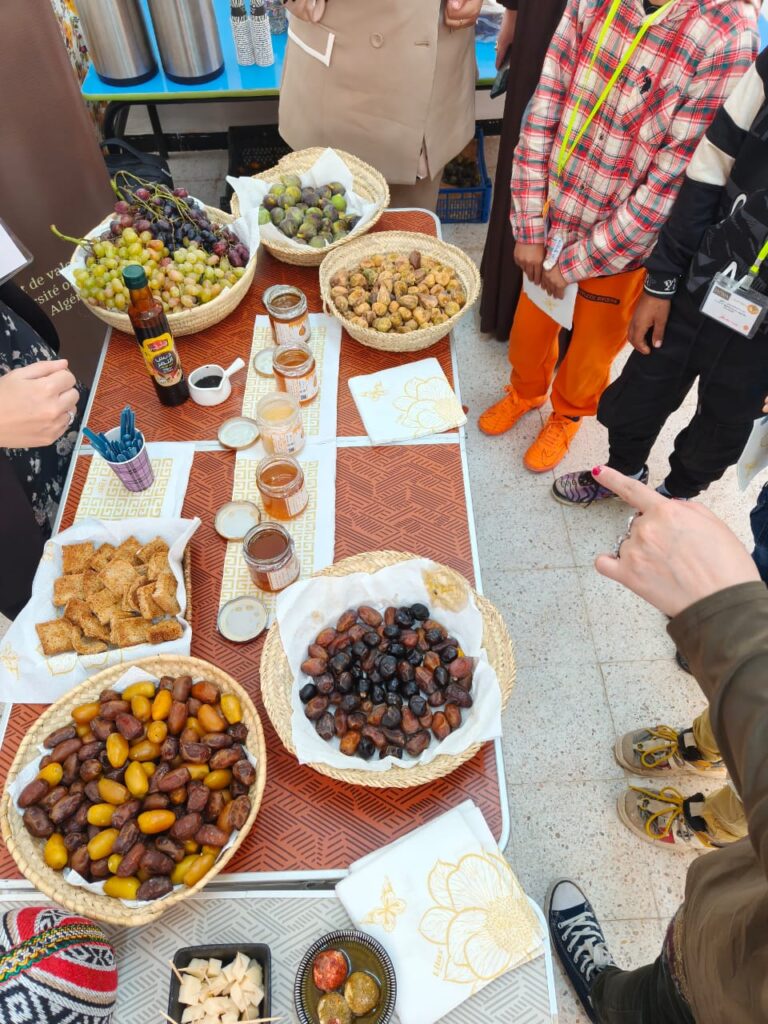
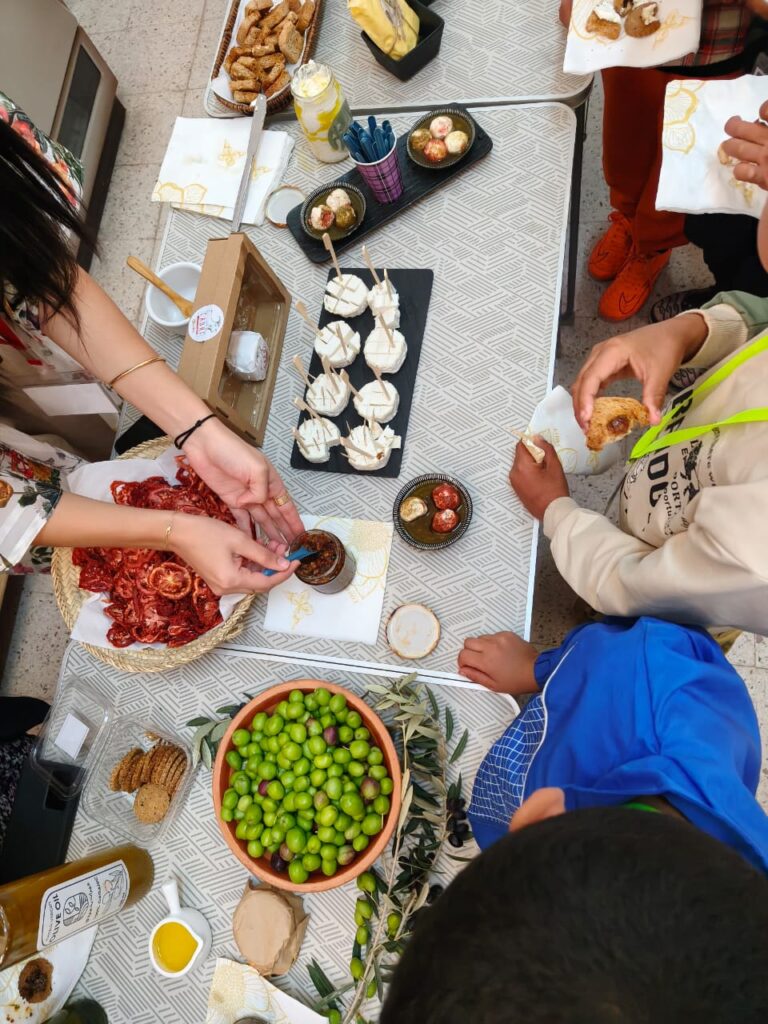
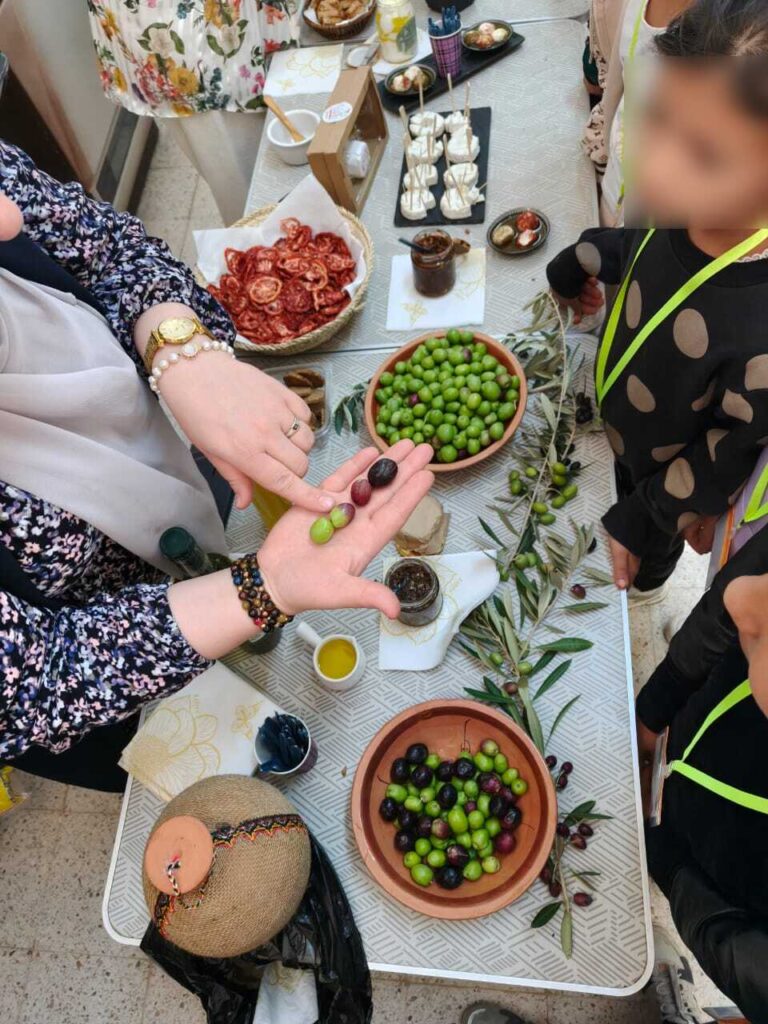
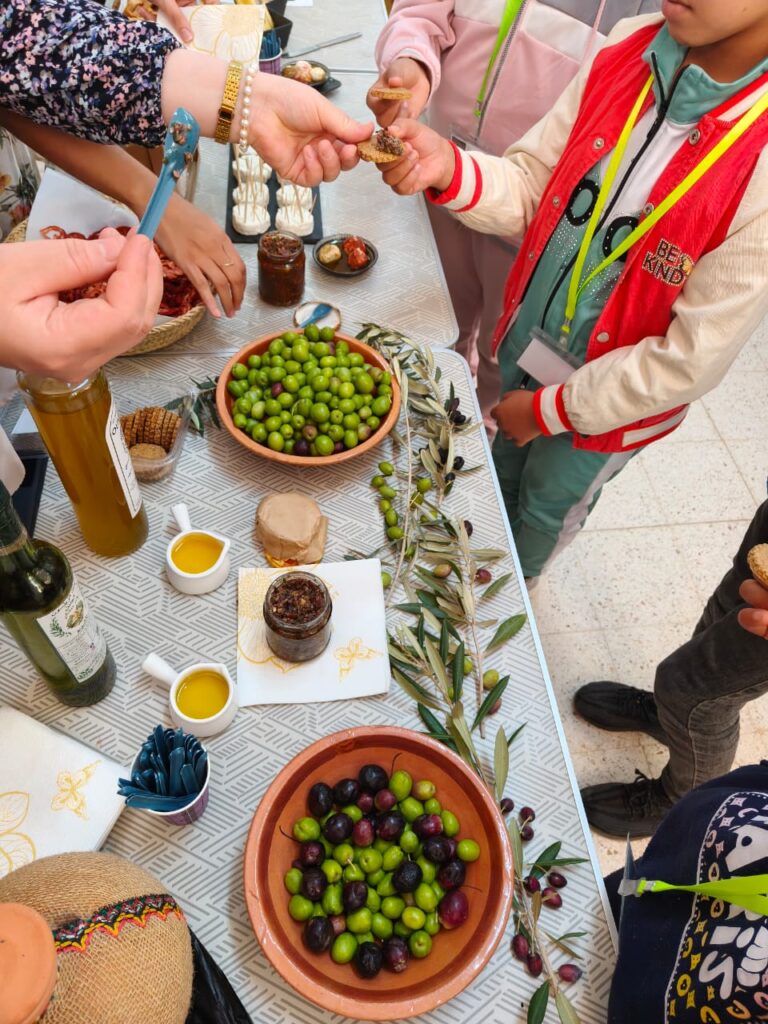
It all began in the autumn of 2025 with awareness-raising days and tastings of fresh produce and artisanal farm products from the farms of Laghouat, organised directly within the school and at the association’s headquarters to explore the various crops and livestock, combined with interactive exercises and quizzes on agrobiodiversity, learning about what a farm is, and using seed kits to grow their first seeds and marvel at their growth. Very quickly, learning turned into concrete action thanks to the educational programme run by the association ‘Ville Verte pour le Développement’.
Through interactive workshops held between January and April 2026, schoolchildren were introduced to the four pillars of local sustainable management: waste sorting, the microscopic study of soil and plant components, the secrets of healthy fertilisation, and the production of home-made compost from peelings and fallen leaves.
For these children from two different environments – the city and a rural area – the highlight of this science programme was the field trips to the local farm #Khayrat_b7erti. Leaving the classroom to get their hands dirty, observe the vital interdependence between livestock and crops, and discover the variety of existing crops, fruit trees, date palms and different breeds of animals sparked a realisation among the young pupils, who came to understand that agriculture is much more than just a job: it is an art of living in harmony with nature.
As it was so aptly put: “Farming isn’t something you read about; it’s something you experience.”
Environmental art as a cry from the heart: the ‘Small actions, big horizons’ project
Because an appreciation of nature is also fostered through emotion and creativity, the visual artist Mustapha TAABA (#TAABAART) guided the pupils through an in-depth artistic exploration throughout the second term. No fewer than 47 children took part in workshops focusing on free expression and an introduction to natural and eco-friendly painting techniques.
Each pupil created several pieces of their own:
- The Symbolic Eye (“I see, I act, I love”), to express their view of the living world.
- The Handprint (“My land, my hand, my horizon”), symbolising their pledge of commitment.
- A free-form work (“The Land as I See It”), celebrating the richness of their local area.
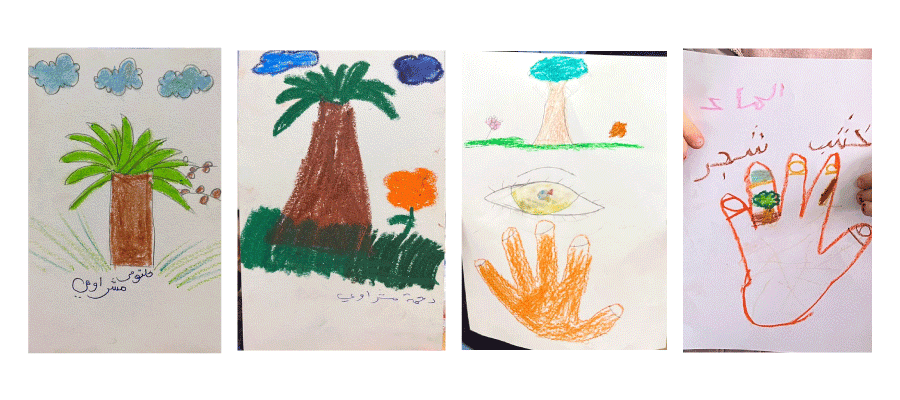
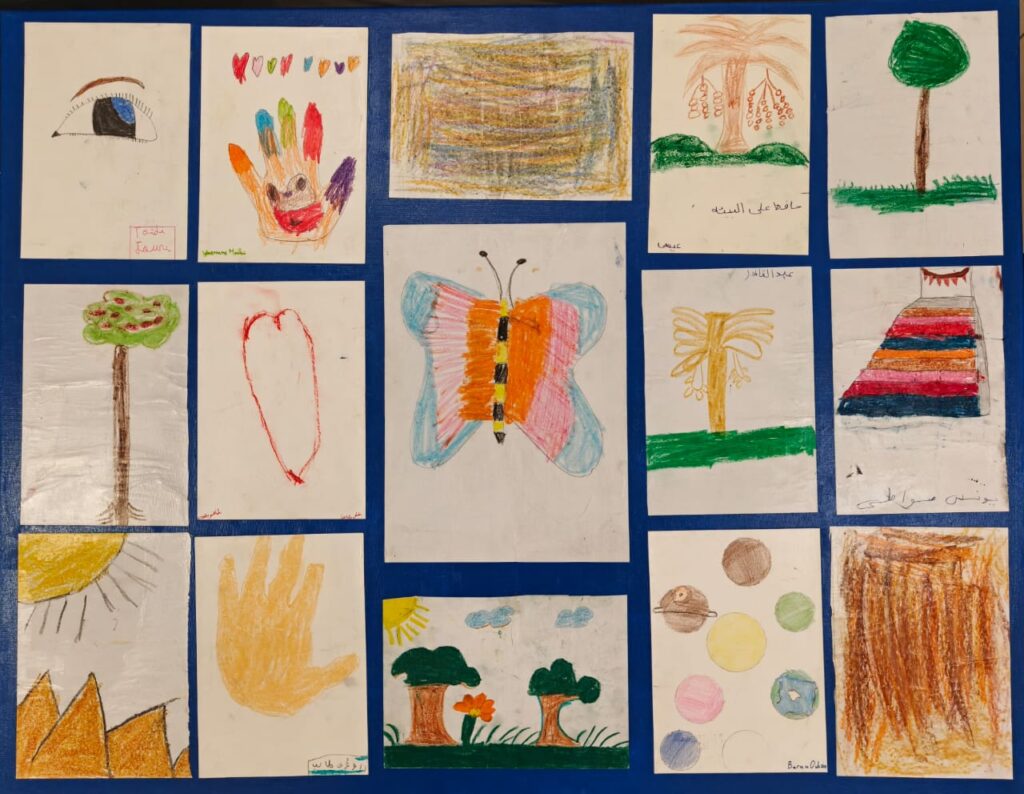
The culmination of this project was the creation of three magnificent collaborative paintings. A colourful mosaic of the children’s individual work, these magnificent murals tell a vibrant story of the Sahara, dominated by date palms, water, the sun, and a cosmic vision of biodiversity of rare poetic beauty.
On stage: ‘Water is Life’ takes centre stage
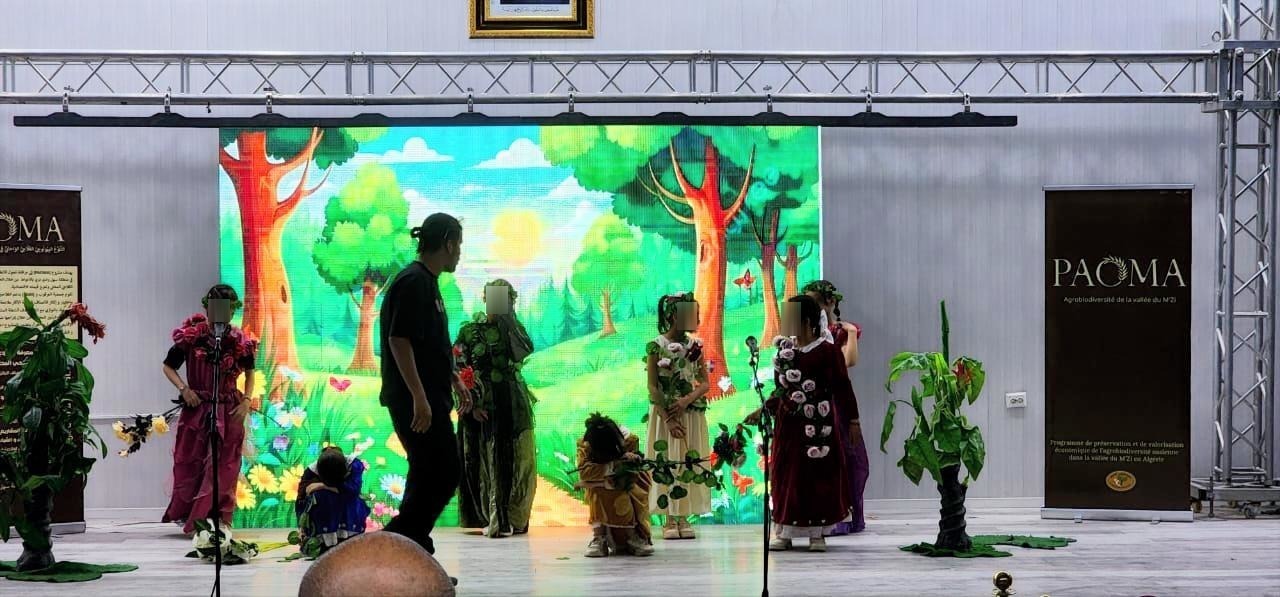
At the same time, the cultural association Tour’Art spent several weeks in the classrooms, turning the schoolchildren into proper professional actors. Following reading sessions, stage performance exercises and intensive auditions between February and April, the children took on the roles in a powerful play entitled “Water is Life“.
The play, performed at both schools during the National Knowledge Day celebrations on 16 April, depicts the journey of a child who initially behaves destructively – leading his friends to litter, uproot flowers and plants, and waste water – but who, following a magical conversation with a personified ‘drop of water’, becomes aware of the impact of his actions. The performance, rigorously rehearsed and remarkably presented, conveys a universal and poignant message through the voices of these young actors: water is a precious shared resource, and protecting it is the responsibility of everyone, young and old alike.
A memorable finale
The culmination of this fruitful school year took place on Tuesday 28 April 2026 at the Centre de Loisirs Scientifiques in Laghouat. In an atmosphere of pride and emotion, the El Argoub Association brought together all its partners, teachers and families to celebrate the pupils’ work.
The public had the chance to explore the gardening and recycling pavilion, admire the large art exhibition, and watch a short animated film on environmental education—conceived and produced by the Tour’Art cultural association—about the protection of water resources, followed by a lively discussion with the children. On stage, the schoolchildren’s theatre troupe delivered a brilliant performance, greeted by thunderous applause.
The day concluded with the presentation of certificates of participation to the children, who were officially named “young environmental ambassadors”, as well as certificates of appreciation to the teaching staff at both schools and the service providers who supervised all these activities, in recognition of their unfailing dedication.
A promising outlook for the start of the new academic year
Far from being merely a conclusion, this event marks the start of a long-term initiative. A date has already been set for the start of the next academic year, 2026/2027. On the agenda: follow-up activities with the same eco-conscious school classes, including the production of another short animated film, a new play and introductory robotics lessons for the rational and optimised management of natural resources and, above all, the practical creation of “biodiversity gardens” within the green spaces of the KAZOUAI Attallah and MECHRAOUI Djelloul schools and at the association’s headquarters.
Thanks to the PAOMA project, these dozens of children have not only learnt to paint, act or plant seeds. They have developed a deep sense of pride in their local area and the conviction that, whatever our age, every little action counts when it comes to safeguarding the future of our planet.