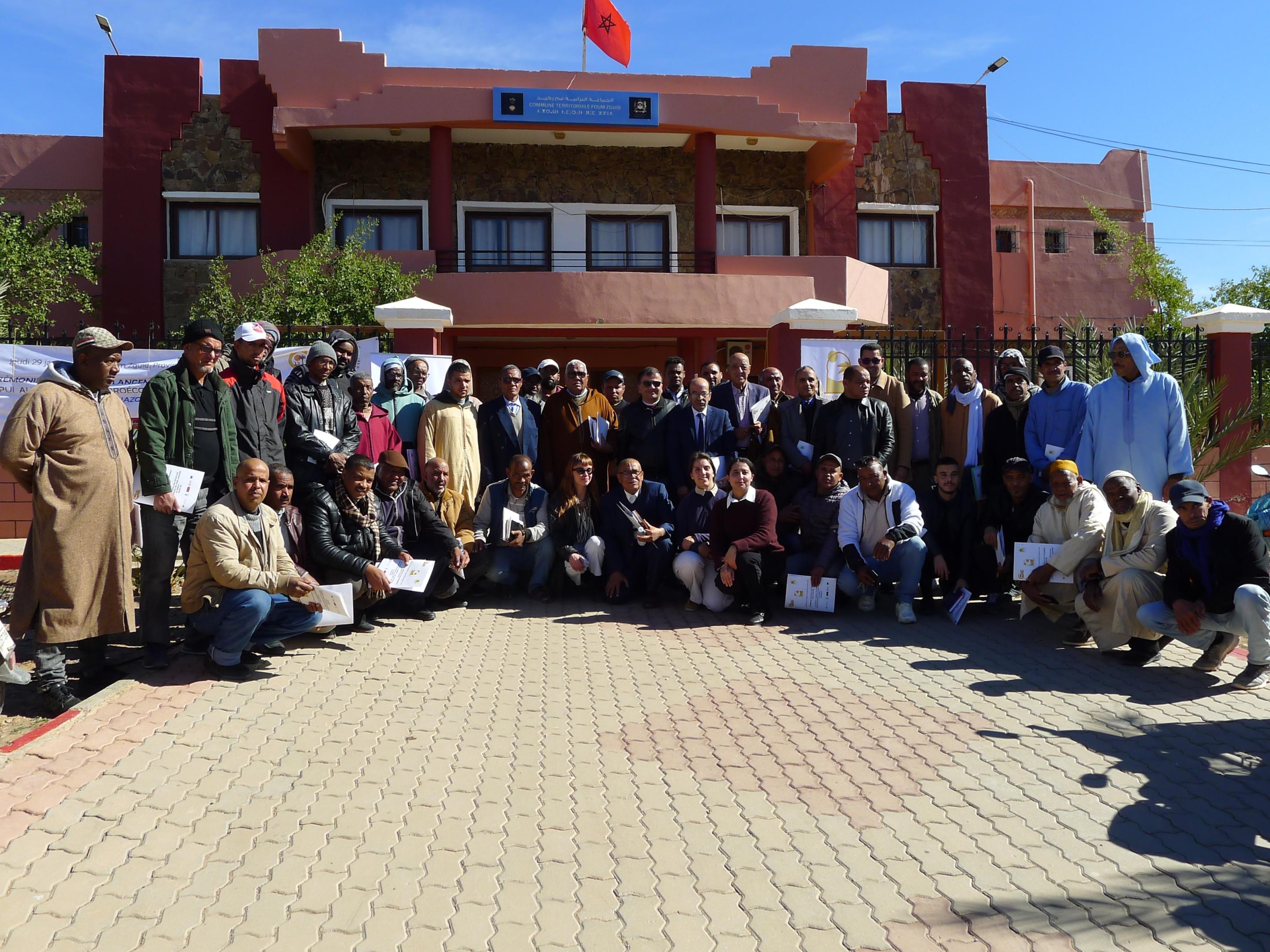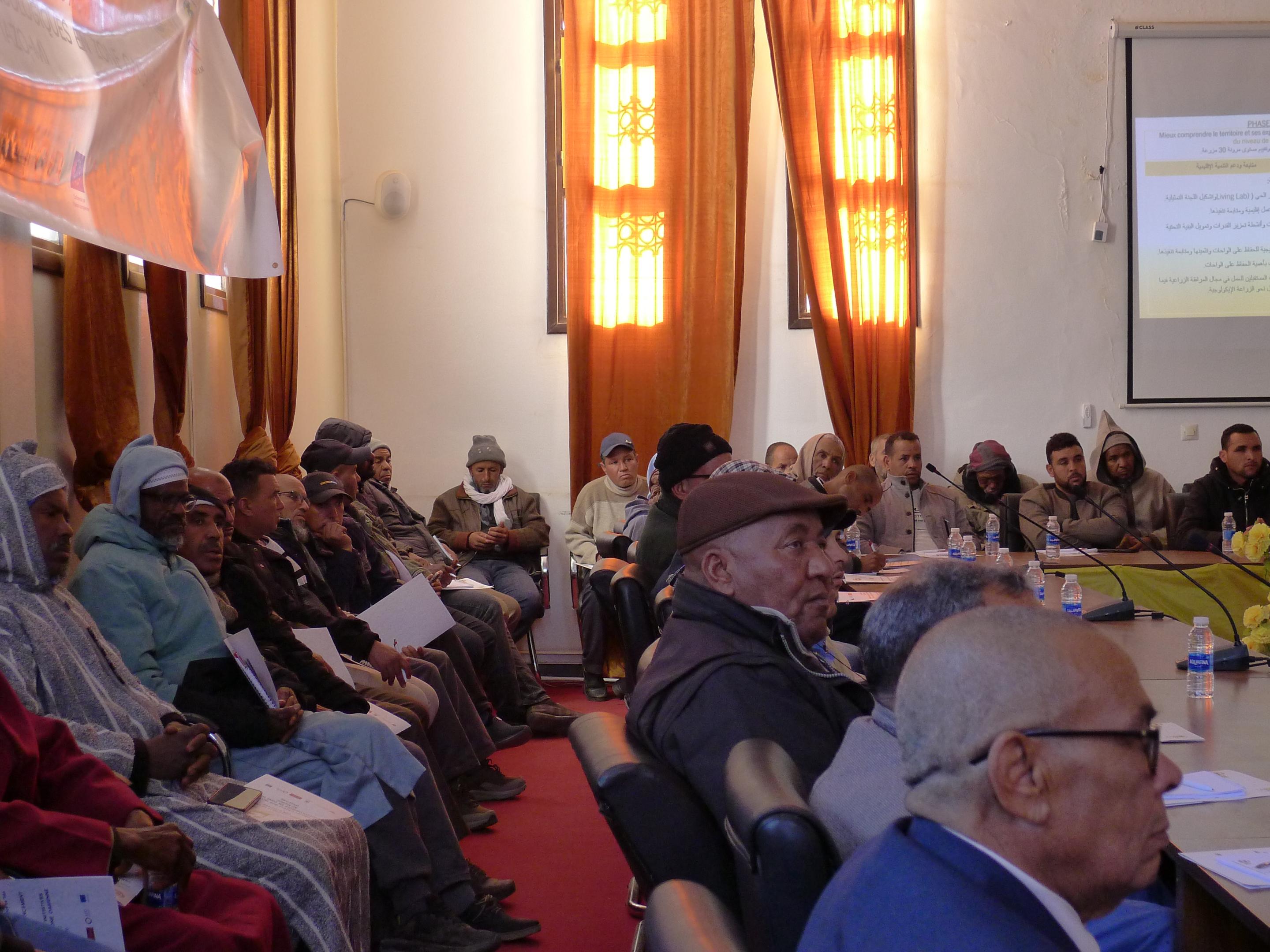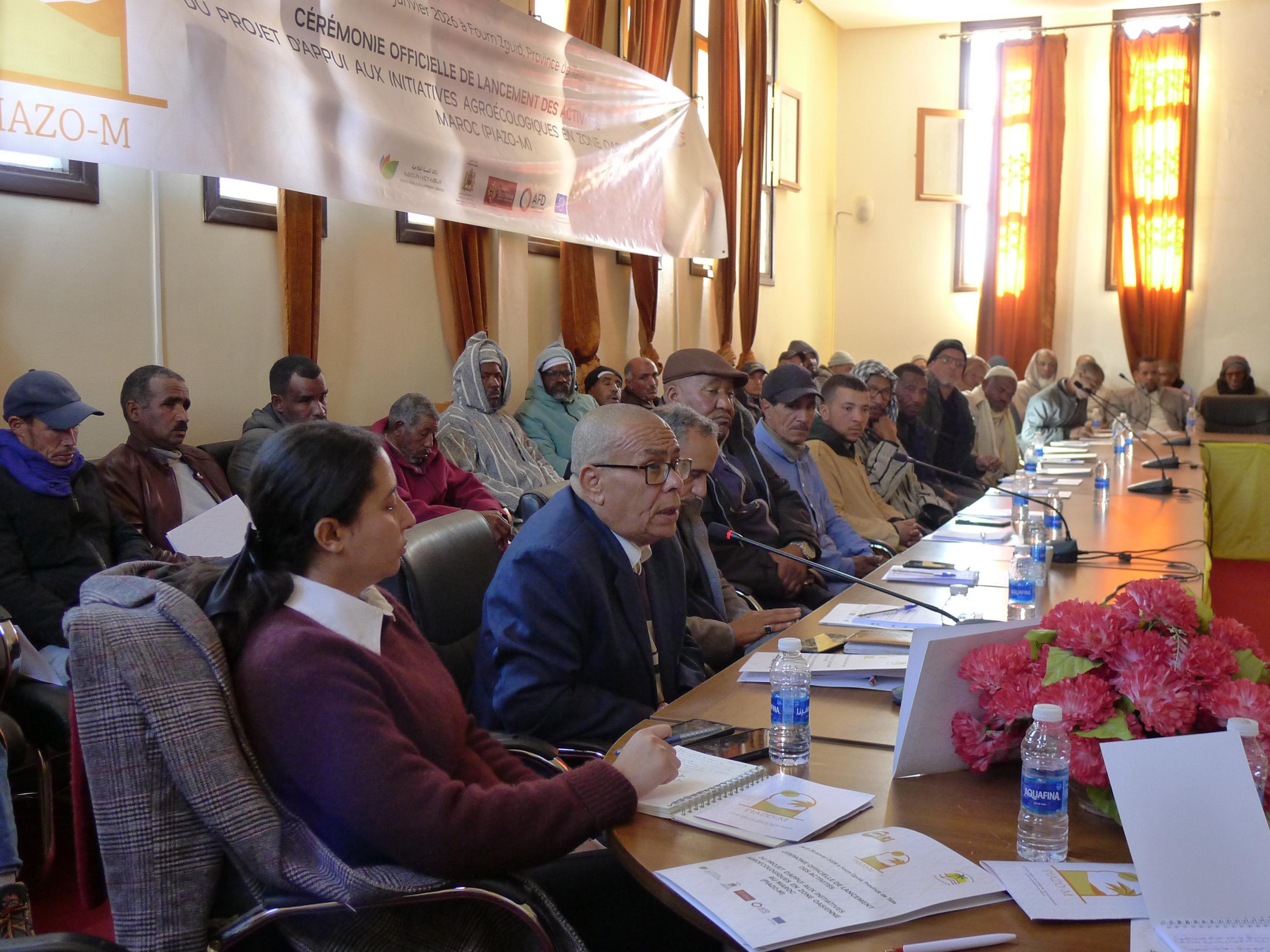
On Thursday, 29 January, the official ceremony to launch the activities of the Projet d’appui aux Initiatives Agroécologiques en Zone Oasienne au Maroc (PIAZO-M).
This first activity aimed to mark the official launch of the project by bringing together several local stakeholders to recontextualise the project in light of the challenges facing the region, present the intervention logic, the expected results and the main activities planned to this end, and finally enable stakeholders to exchange ideas, provide feedback and ask questions.
This event brought together around 80 people. Participants included local elected officials, representatives of decentralised government departments (Provincial Directorate of Agriculture, National Agricultural Advisory Office, National Agency for the Development of Oasis Areas and Argan Trees, etc.), farmers and representatives of civil society.
The final session, devoted to discussions and questions from participants, gave many people the opportunity to express their expectations regarding the project, but also more generally regarding the IHYAE programme, coordinated by the Agricultural Development Agency, of which the project is a part. Several people asked for clarification on the implementation of certain activities, while others made recommendations highlighting issues that are problematic for the local agricultural context, such as access to and management of water, soil quality, dissemination of good practices and marketing.
The next step for PIAZO-M will be to set up a regional consultation mechanism involving the three municipalities – Foum Zguid, Allougoum and Tlit – which will be facilitated with the support of the project team through the creation of a representative committee bringing together several key regional stakeholders with the aim of promoting sustainable oasis agroecosystems. At the same time, work will be carried out to characterise the region, starting with a regional assessment, the results of which will enable the identification of regional factors that influence the resilience of local farms.