Following Manon’s departure at the end of June to pursue new professional opportunities, Marion has taken over coordination of the Kilimo Endelevu Arusha (KEA) project. Launched in 2022, this project aims to strengthen the resilience of communities in the Arusha region by supporting the development of sustainable food systems through sustainable land management, the agroecological transition, and territorial governance.
In late October, Marion and Renaud Piquemal, a CARI administrator and expert in organic waste management, traveled to Arusha for a week-long mission.
Strengthen coordination with local partners
Coordination meetings were held with the two project partners, MVIWAARUSHA and RECODA, to review ongoing activities, share progress, and collectively define the next steps for the project.
Making Progress on Turning Organic Waste into Compost
We also spent several days addressing the issue of converting organic waste into compost, with the aim of helping to improve soil fertility in the villages of the Arusha District.
To better understand the opportunities and challenges in the area, we met with various local stakeholders involved in the production, collection, transportation, and recycling of organic waste.
These visits and discussions helped supplement the assessment conducted over the summer by Amiri and enabled us to develop an action plan for the next steps, which includes conducting initial composting trials.
Discover agroecological and land restoration initiatives in villages
The mission also provided an opportunity to visit several villages supported by the project, focusing on sustainable land management and the agroecological transition.
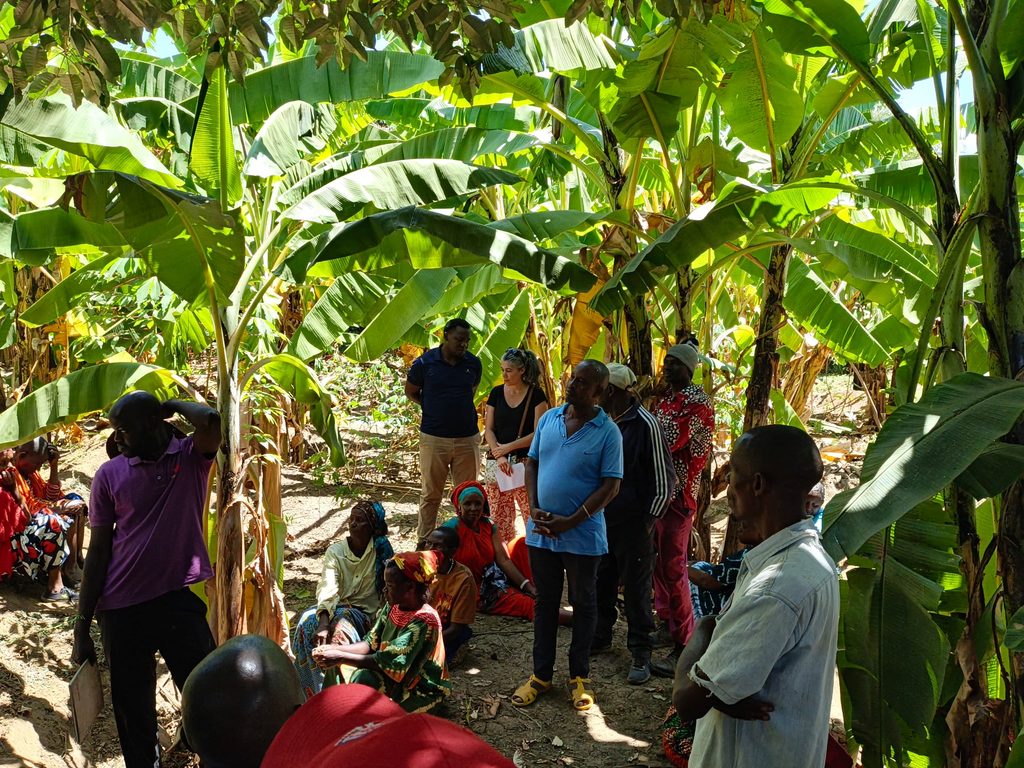
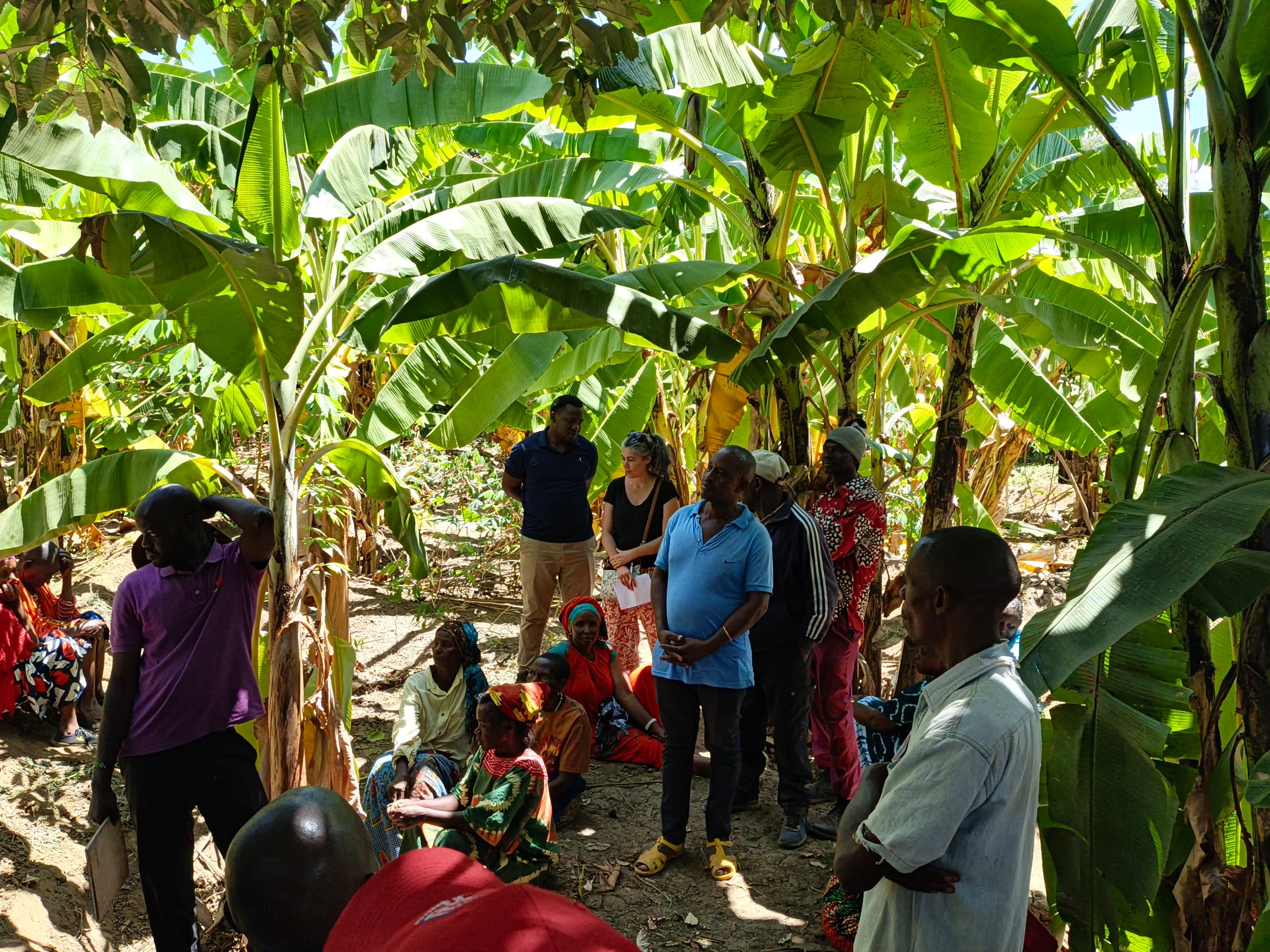
In Maji Moto, we spoke with farmers’ groups about the agroecological practices being tested on a demonstration plot. This plot features a mixed crop system of bananas, cassava, and beans. We also met with “environmental champions” to discuss the practice of kisiki hai, a natural vegetation regeneration technique designed to combat erosion and enhance soil fertility.
In Ekenywa, we met with the local MVIWAEKE network, which is receiving support from project partners to establish a nursery. This initiative contributes to the development of local plant resources and the dissemination of practices that support sustainable land management.
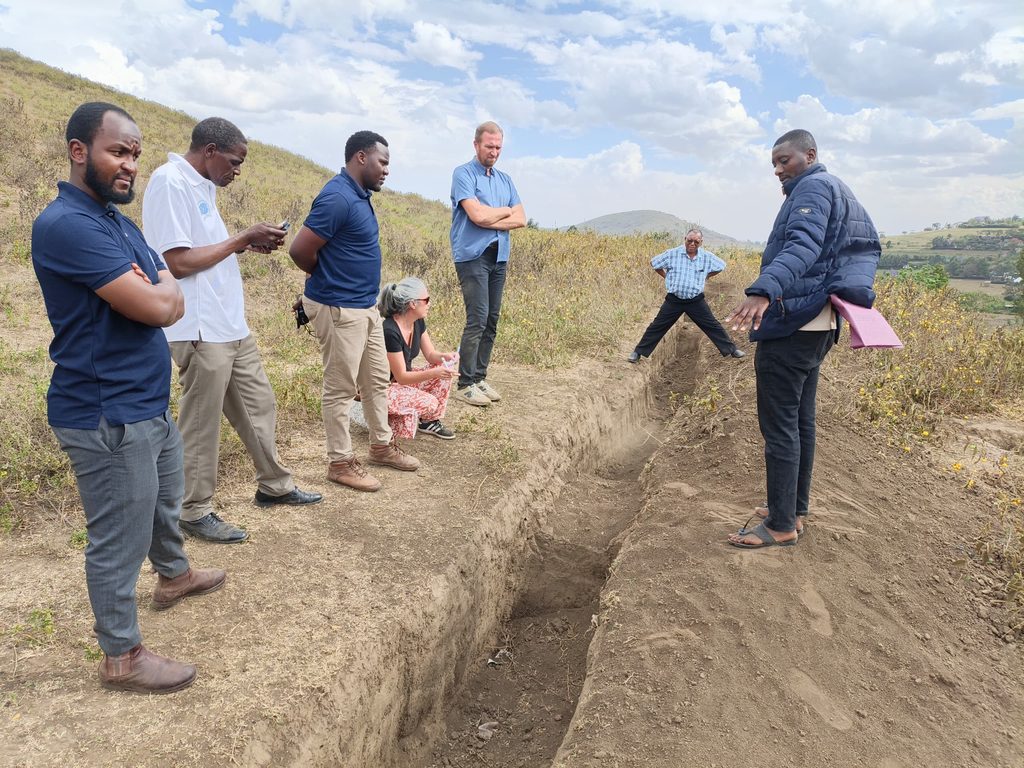
In Losikito, discussions with the environmental champions focused on erosion control and soil restoration practices, particularly the “fanya juu fanya chini” technique. This technique involves constructing dikes and ditches on farmland to slow water runoff, limit erosion, and promote water infiltration into the soil.
This mission thus helped strengthen ties with local partners, gain a better understanding of the dynamics at play in the region, and clarify the next steps for the project.