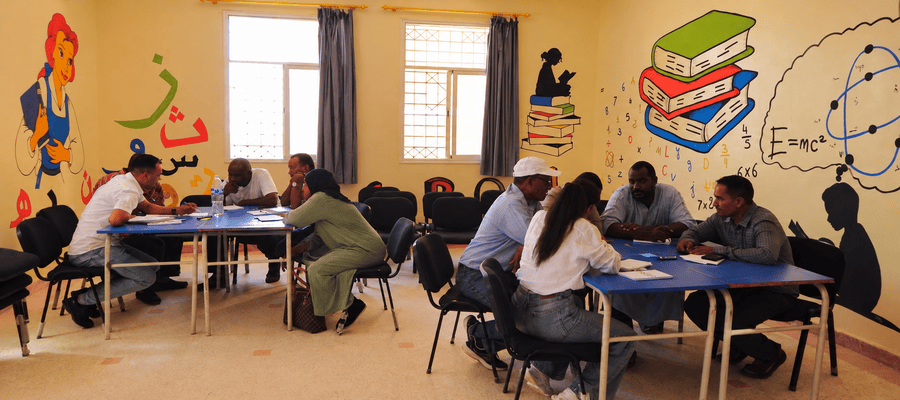
From 17 to 28 August 2026, the international community gathered in Ulaanbaatar, Mongolia, for the 17th Conference of the Parties to the United Nations Convention to Combat Desertification (UNCCD). As part of the French delegation, CARI took part in the discussions and brought forward the recommendations developed through Désertif’actions 2026, which this year focused on territorial resilience to drought.
A COP at the heart of land and drought issues
The UNCCD is one of the three Rio Conventions, alongside those on climate change and biodiversity. It is the main multilateral framework addressing desertification, land degradation and drought.
COP17 discussions covered land restoration, drought resilience, rangelands and pastoralism, food systems, water and financing. Held in Mongolia during the International Year of Rangelands and Pastoralists, the conference also provided an important opportunity to give greater recognition to pastoral systems and the people who manage them. Rangelands cover 54% of the Earth’s land surface and support around two billion people.
Bringing Désertif’actions messages into the COP
CARI’s participation directly followed on from Désertif’actions 2026, which mobilized nearly 1,500 people from around 50 countries, including civil society organizations, researchers, local authorities and public institutions.
One central message emerged from this process: while droughts cannot be prevented, vulnerabilities can be reduced so that drought does not turn into disaster. This means moving beyond a mainly reactive approach towards stronger anticipation, prevention and territorial resilience.
Désertif’actions recommendations notably call for drought to be treated as a systemic risk, for better coordination between public policies, stronger multi-stakeholder governance, improved access to finance for local actors, and greater investment in training and support. They also contribute to a broader perspective of territorial agroecological transition.
Read the Désertif’actions 2026 policy brief here: Regional Resilience to Droughts
CARI mobilized across several COP17 spaces
Throughout the COP, CARI presented and discussed these recommendations in several international events, including:
- “The Riyadh Action Agenda: Showcasing Delivery by the RAA Community”;
- the side event “Agroecology as a Tool for Territorial Resilience to Crisis Events”;
- the side event “From an Invisible Crisis to Collective Action: Communicating about Desertification and Mobilising Solutions”;
- and several events organized or co-organized at the France Pavilion, focusing on agroecology, water and territorial drought resilience.
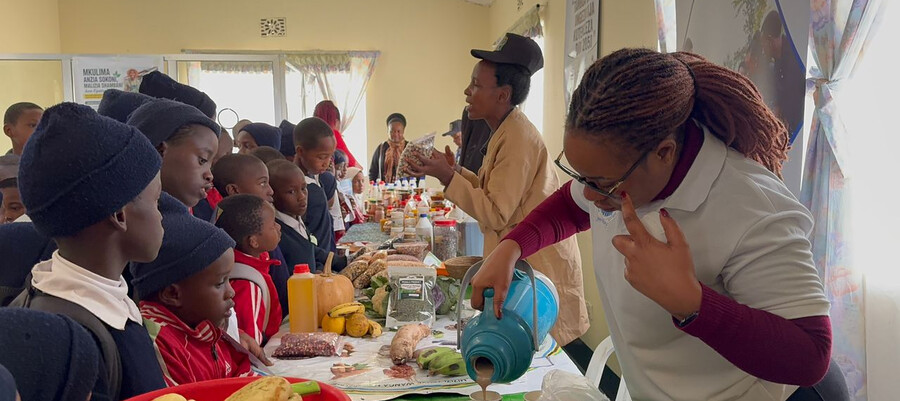
Beyond these contributions, CARI continued its efforts to strengthen the participation of civil society and local authorities in the UNCCD process. Several partners were able to attend COP17 as part of the CARI delegation, including representatives of East African civil society organizations and French local authorities.
A mixed outcome from COP17
Our first assessment of COP17 is mixed.
At the opening of the conference, the United States objected to the inclusion of several agenda items relating in particular to synergies between the Rio Conventions, gender and civil society participation. These issues could therefore not be formally discussed. For CARI, this was another illustration of the current fragility of multilateralism, showing how progress built over many years can quickly be called into question.
The space given to civil society also raised concerns. The CSO Panel nevertheless played an important role in helping organizations coordinate and participate, but the fact that the formal agenda item on civil society participation could not be discussed sends a worrying signal.
Strong momentum around restoration and finance
COP17 confirmed a strong focus on land restoration and on mobilizing finance, including private finance. This is essential given the scale of the needs, but it also raises questions: how can we ensure that these resources actually reach territories and vulnerable populations? How can we avoid multiplying complex mechanisms that generate additional transaction costs? And how can the Convention retain its development and poverty-reduction dimension?
One of the major announcements was the launch of the Drought Resilience Investment Facility (DRIF), described by UNCCD as the first global catalytic finance platform dedicated specifically to drought resilience. Co-created by UNCCD and Luxembourg, it aims to mobilize up to US$400 million in public and private capital for water security, sustainable agriculture, nature-based solutions and land restoration.
Progress for rangelands, pastoralists and local authorities
COP17 nevertheless delivered several important advances.
Rangelands and pastoralists received much greater political visibility, notably through the launch of the Rangelands Flagship Initiative. The initiative brings together a portfolio of US$1.2 billion across 45 projects, supporting sustainable rangeland management, restoration and pastoralist livelihoods — the largest mobilization for rangelands in the history of the Convention.
The role of local and regional governments also received greater recognition, notably through the Mayors’ Forum and the Ulaanbaatar Declaration, which calls for stronger and more permanent participation of cities and regions in the UNCCD process.
On drought, a missed opportunity
This is probably where the outcome is most disappointing in light of the messages brought forward by Désertif’actions.
Despite the growing urgency, Parties failed to reach a substantive negotiated outcome on drought. The issue has been postponed to COP18, which is expected to take place in Egypt in 2028, and drought will remain a stand-alone agenda item at future ordinary COPs.
For CARI and the partners involved in Désertif’actions, this represents a missed opportunity. As droughts become more frequent and severe in many territories, waiting another two years for significant political progress is difficult to reconcile with realities on the ground.
This outcome only reinforces the need to continue the work already underway: documenting effective solutions, strengthening alliances between actors, and advocating for an approach based on anticipation and vulnerability reduction rather than crisis response alone.
The work continues
COP17 therefore ends with a mixed picture: some important progress, but also political blockages that raise broader questions about the functioning of multilateralism.
For CARI, however, Ulaanbaatar was only one step. The analyses and recommendations produced through Désertif’actions 2026 will continue to feed dialogue with territorial actors and decision-makers in the run-up to the next stages of the Convention.
👉 Find all Désertif’actions 2026 resources and recommendations here
Further Reading
Read CARI’s full statement and its four priorities for the future in our press release.
👉Download the press release “COP17: Multilateralism Hindered—Rural Communities Must Be Restored to the Center of Action”