Following three years of implementation, from 01st September 2023 to 31st August 2026, the first phase of the Structured Action Programme for Actors Combating Desertification (PASS-LCD) has come to an end.
Implemented by CARI and its partners, the programme pursued two objectives: promoting greater recognition of agroecology in public policies and strengthening recognition of the contribution made by civil society organisations to the Great Green Wall.
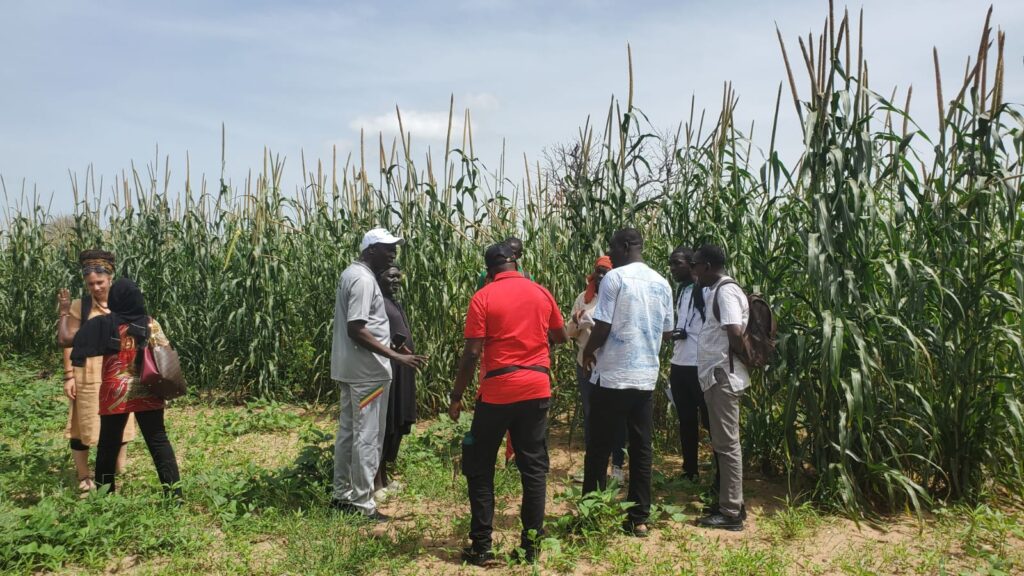
An external evaluation was conducted by SalvaTerra to document the progress achieved, assess the programme’s results and formulate recommendations for its subsequent phases. It was based on a desk review, a field mission to Senegal and consultations with 43 people representing project teams, partners, civil society organisations and institutional stakeholders.
A recognised contribution to agroecology advocacy
The evaluation provides an overall positive assessment of the programme’s agroecology advocacy component. In particular, it highlights the relevance of a strategy built on established and recognised networks: the Working Group on Desertification (GTD), coordinated by CARI; the Sahel Desertification Network (ReSaD); and the Dynamics for an Agroecological Transition in Senegal (DyTAES).
The production of knowledge, workshops, consultations and dialogue spaces enabled partner organisations to develop and promote common positions, from the territorial level to international institutions.
In Senegal, the work conducted by the DyTAES contributed to the development of the National Strategy for Agroecological Transition, which was adopted by the Council of Ministers in June 2026. At the international level, advocacy undertaken by the GTD and its partners helped strengthen the recognition of agroecology within discussions held under the United Nations Convention to Combat Desertification.
The Désertif’actions initiative was also recognised as an important mechanism for connecting local experiences with international debates, facilitating exchanges between organisations and developing collective recommendations.
Building foundations to strengthen the role of civil society in the Great Green Wall
PASS-LCD also helped document more effectively the contribution of civil society organisations to the Great Green Wall. The work conducted under the programme identified and characterised 46 Sahelian organisations involved in its implementation.
- Read the article about the work carried out by the international solidarity volunteer as part of the Great Green Wall Initiative
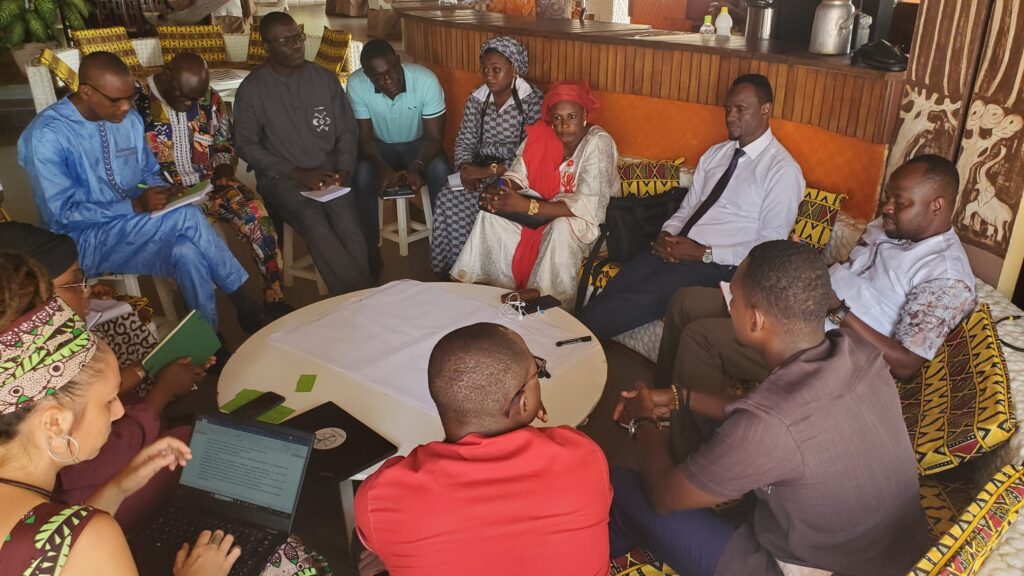
The regional workshop held in Saly in October 2025 represented an important milestone. It brought together civil society organisations and public institutions to explore how local initiatives could be better recognised and incorporated into the monitoring of the Great Green Wall.
However, the evaluation also found that civil society participation in the initiative’s governance remains insufficiently formalised and that access to funding is still limited. The knowledge and proposals developed during the first phase therefore provide a foundation that must now be translated into concrete action.
A resilient partnership in a challenging context
One of the programme’s main achievements lies in the ability of CARI and its partners to maintain a regional dynamic despite political instability and diminishing opportunities for cooperation in several Sahelian countries.
SPONG in Burkina Faso, CNCOD in Niger and REFEDE in Mali continued to contribute to knowledge-management activities, governance mechanisms and preparations for Désertif’actions. This engagement demonstrates the strength of the long-term relationships built through the Sahel Desertification Network.
Preparing the programme’s next steps
The evaluation recommends improving the dissemination of the knowledge produced, strengthening understanding of advocacy mechanisms and building stronger connections between territorial, national and international levels.
It also calls on the programme to consolidate the representation of civil society organisations in the governance of the Great Green Wall, strengthen their fundraising capacities and involve local authorities, young people and gender considerations more systematically.
The completion of this first phase does not mark the end of the momentum generated. The results achieved and the lessons drawn from the evaluation provide a valuable foundation for continuing cooperation between the networks and strengthening their collective influence in support of agroecology and the fight against desertification.